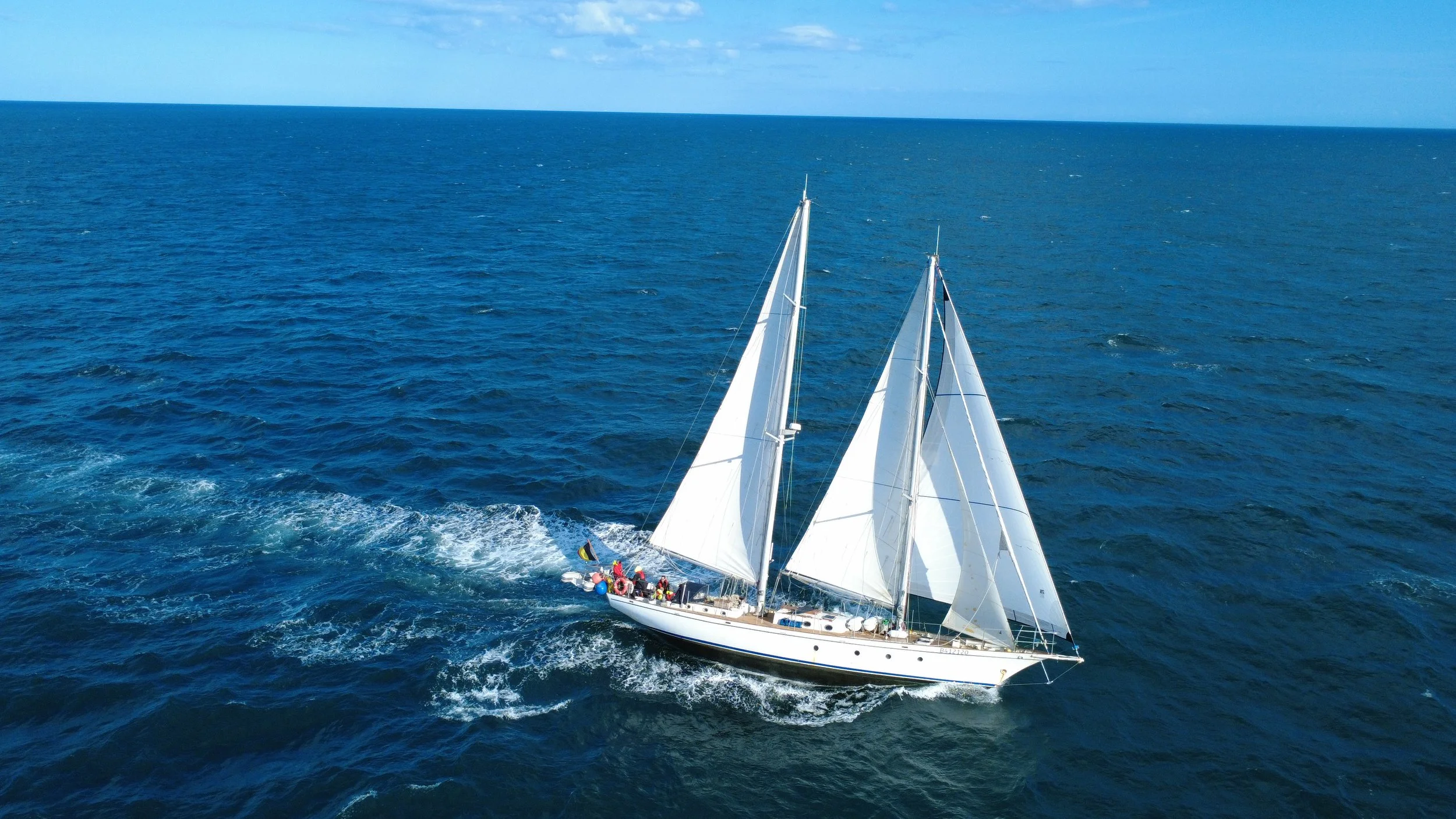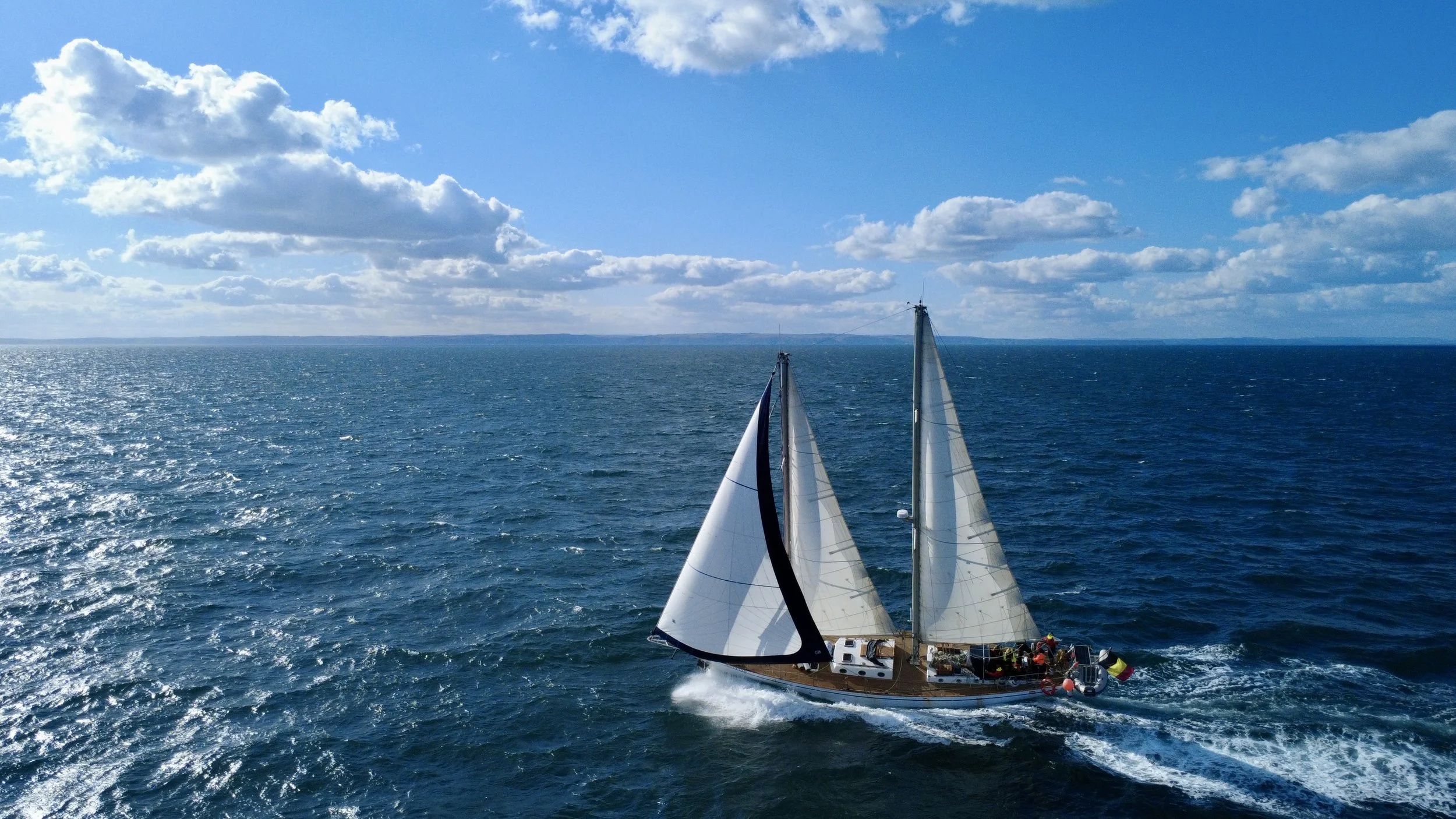
Photo taken by Stefaan Pauwels

Bound for Ireland

Written By Jo Martens

The train shoots from Lille to Boulogne. At high speed, like the one from Brussels to Lille. "I love this train," I text my son. For us, it has become a symbol of a Europe not yet fully written. One that connects cities and people by intention, seemingly effortlessly. The concept makes me happy. The design delights me. The engineering impresses me.

A few days earlier I had made the passage with Spirit of Ostend from Ostend to Boulogne. With my spirited father, one of his good friends, my son and his best friend. Wind and tide behind us, we arrive in the evening as the blazing sun drops from white gold to copper red into the sea. Boulogne stinks. That typical rotten egg smell, a mix of rotting sediment stirred up by agricultural runoff and overflowing drains when it rains hard. New thinking needed to do it differently. Plenty of meaningful work for engineers. We lie at the end of a brand new pontoon, built in 2025 to receive racing yachts and larger vessels. Spirit sits well here. Ready for the leap to Ireland.

"You must be Jo?" Part of the crew who would sail with me had been on the same train. The rest arrives later that evening. We take a taxi to Spirit. It is quite a walk after all. She is still on watch, at the far end of that pontoon, claimed by gulls. The gulls were here first. They are endangered, though you would not think so from the noise. It is the gulls who allow us to be here. We dump our bags and walk to the Carrefour, stocking up for the passage. The few kilometres on foot make it a small workout. A farmers walk they do in the gym with weights, we do with heavy shopping bags. Everything gets stowed away, tucked into the large and small lockers hidden in the nooks and corners that make Spirit a cargo ship, as though she is inviting us toward an even greater crossing, to another continent. We set the tone with the first sailors stories. This feels right. These are people who live with love and healthy respect for nature. Later the rest of the crew arrives. Eight of us in total. Me as skipper and seven crew, all sailors, all different backgrounds. That evening around the large teak table in the wide belly of the ship we hold our first briefings and take the time to get to know each other. Tomorrow we prepare Spirit and ourselves. We want to leave around midday, with high water and a fair stream.

At 12:45 we cast off the lines. The current nudges us gently away from the pontoon. We motor out, against wind and a little current, toward that large white mark on the breakwater with the lighthouse, so as not to run carelessly aground on the shoal to the north of the channel. We steer along the breakwater, hard against the current now, punching through short steep chop. A proper washing machine. We hoist the sails, bear away to run parallel with the great shipping highway of tankers and cargo ships and kill the engine. We are away, bound for Ireland.

We have a plan. An ever changing plan. But we always have a plan. First we aim for Portland, then for Falmouth, eventually for Penzance in Cornwall. A good 300 miles away. We have predominantly northwest wind, so it will be hard on the wind, with a few extra tacks and beats to work our way to Penzance. We split the crew into three watches for the night. Everyone finds their preference and their rhythm and everything clicks together wonderfully, as though it could not be otherwise. A good 48 hours later we drop anchor in the bay of St Michael's Mount. The oilskins come off and the sun sets to work drying the lifejackets. The castle is impressive. The anchorage breathtakingly beautiful. Part of the crew goes ashore in search of fresh bread and a new impeller for the galley grey water pump. We fix a few small things and everyone tries to get some sleep. At 22:30 we weigh anchor again, to beat up to St Agnes in the Isles of Scilly and arrive there in daylight.

At 7:30 we leave for Ireland, threading between the rocks and islands and leaving the Scillies via the North West Passage. There is already some wind but it is the swell and the waves that make the impression. You feel the ocean. Everything becomes bigger and more magnificent. I am in my element. I am a boy again, carried by Spirit, that timeless graceful old lady dancing through the waves. We look after her. We start with a reef in, but soon shake it out. She can take it and she wants more. Twenty knots on this reaching course she handles without a reef. We give her the reins. Before dark we decide to drop the foresail and sail on genoa and mainsail only. The wind picks up further past 25 knots and eases further aft. We cover the 140 miles in just over 20 hours and arrive in a quiet Kinsale a few hours before sunrise. Without many words we tie up silently against the pontoon. The sleeping crew who were off watch come up briefly, surprised we are already there. A few fists bump. Men who have become brothers, slapping each other on the shoulders with contentment and pride. We can fall into a deep sleep now.

Spirit is adventure

Written By Jo Martens

“Spirit is adventure,” my son wrote when he saw her launch.

In Dutch, the word spirit also means soul.

Adventure feeds the soul. And the soul drives us toward adventure.
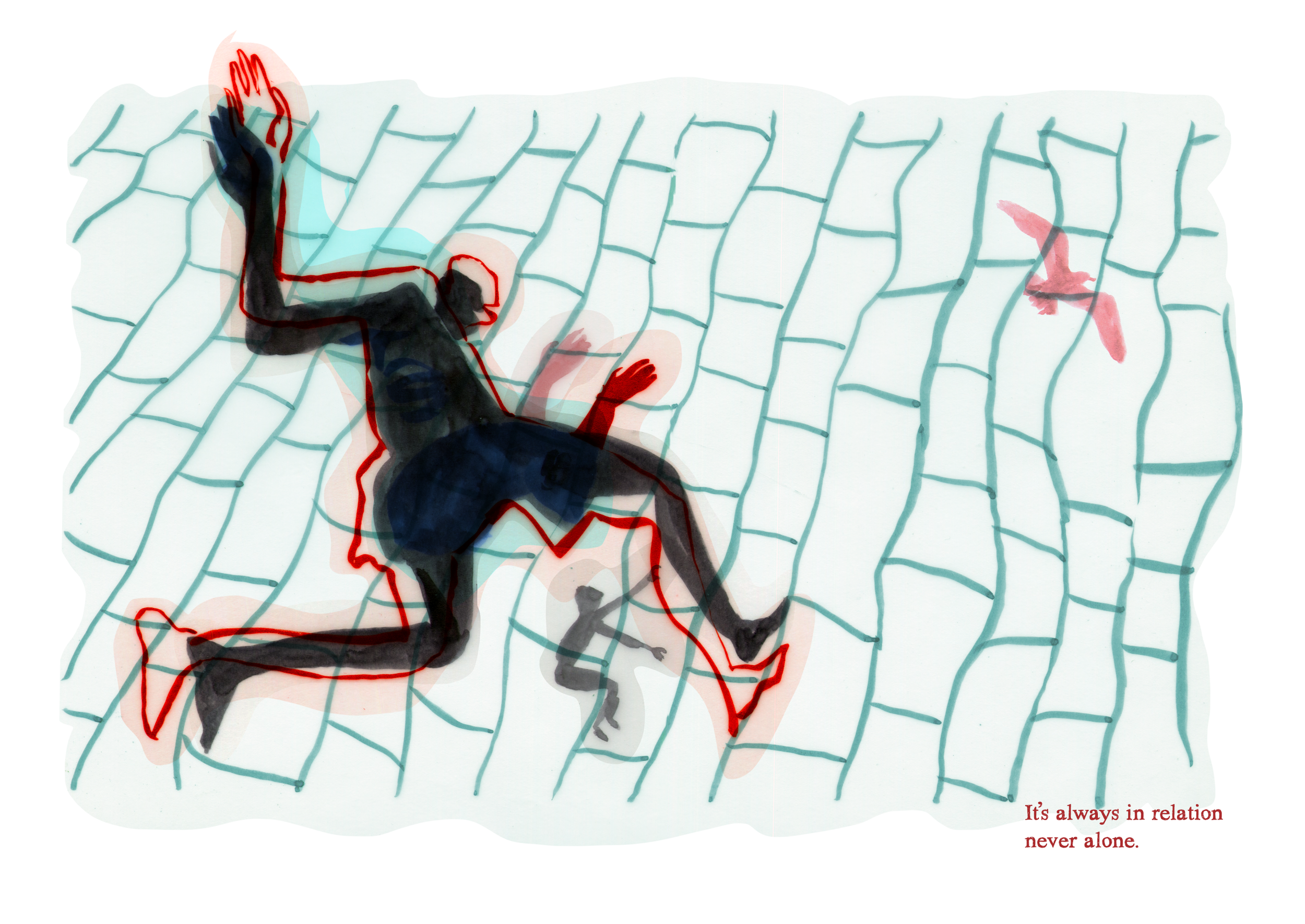
Why is a heap of steel and wood more than a heap of steel and wood?
Why does an old Citroën DS live on in memory, the “Goddess” to some, the strijkijzer where I grew up, and not simply as a car?

Do we give it a soul, or does it give us one? Where does that soul reside?
Could it lie in the tinkering, in the careful work of keeping something that needs care not only alive, but shining again?

Working together, searching, struggling and fixing things gives meaning and pleasure. Perhaps precisely because nothing comes by itself. Because something requires care. Because something offers resistance. Because there is something to be made. That is perhaps where a thing acquires a soul.

Homo faber becomes homo ludens. The working human becomes a playing human. And that play keeps us young, not only in our minds but also in our bodies. It is that contagious energy, that joy of play, that brings us together.

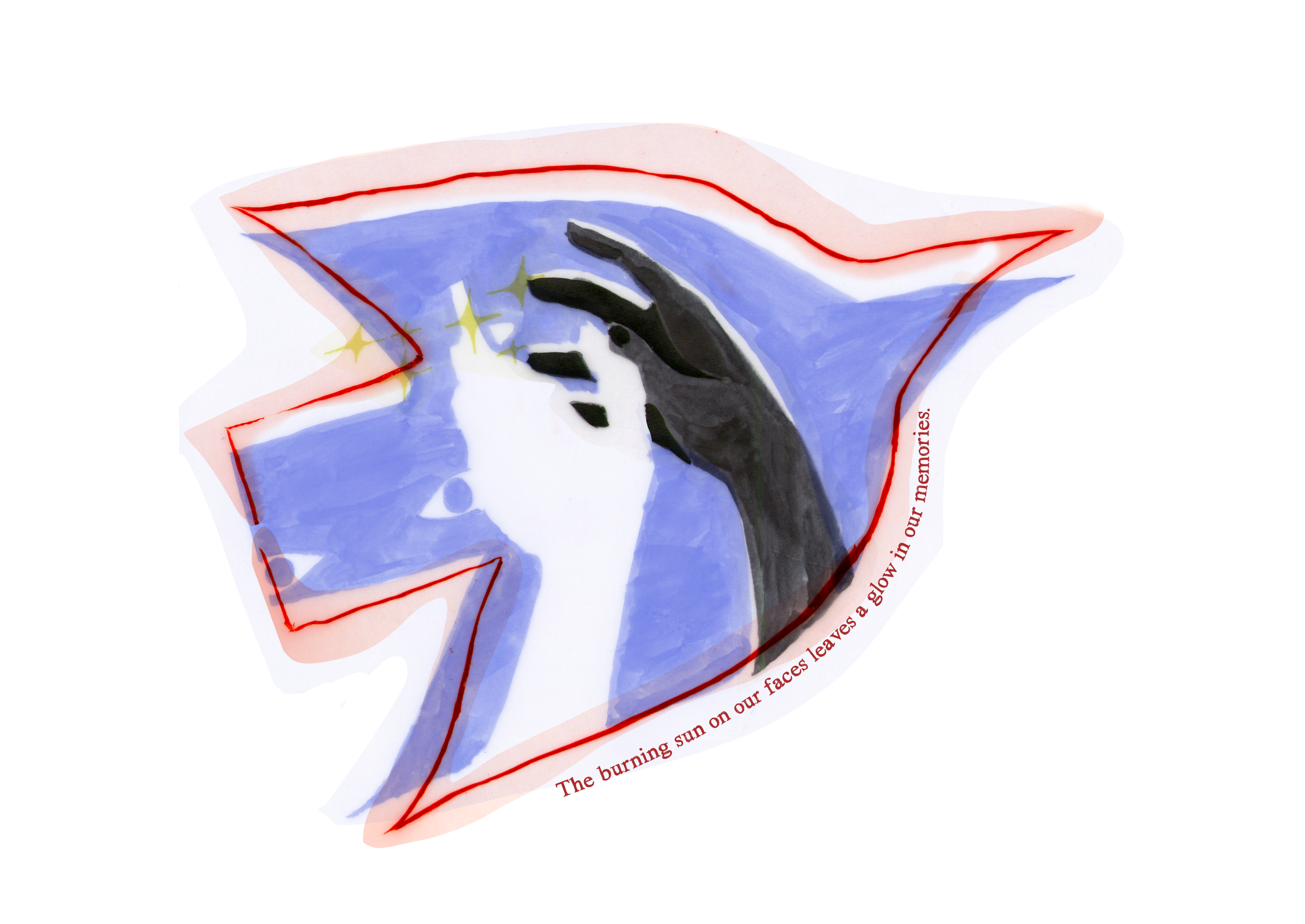
In sailing, many things come together for me. The vita activa meets the vita contemplativa. The stinging rain on our cheeks brings warmth to the conversations. The burning sun on our faces leaves a glow in our memories.

Sailing brings slowness. Brings constraint. And through that, depth.

Spirit is not the adventure.

We are the adventure.

Written By Jo Martens

Somewhere last summer, I watched Rolling Thunder Revue again, the Scorsese documentary about Bob Dylan. A second reading, you could say. Like returning to a book you read too young, not to understand it better, but to hear what now speaks to you.

The film is about communal gatherings, creating and owning your art, sharing your work, inspiring others, speaking truth, weaving myth, finding redemption. In Native American tradition, Rolling Thunder means speaking the truth. Watching it again, in the middle of a thorough refit of an old steel schooner, something clicked.

I wanted to use Spirit of Ostend for my own kind of Rolling Thunder Revue.

I believe I make art. My art is creating the stage, holding the space where something true can happen. For a long time, that stage was my home. My family. An open house, an open family, not limited to the nucleus idea of what a family is supposed to be, but lived as a communion, a gathering. Something with free spirit, open narratives, open endings. A house with a full fridge, food on the table for unexpected guests who always arrived exactly when they were meant to.

After twenty-five years, my lover and I decided to go apart. I didn’t only lose my lover. I eventually lost my home as well. With that loss, I lost more than a place. I lost the idea — and the identity — of a family, and my role in holding that space and stage. That loss was greater than the loss of the person I loved. It was the loss of a grounding identity.

That’s when Spirit entered my life.

In February 2023, I flew from Brussels to Barcelona and drove on to Girona. I had been looking for a ship for a long time. I arrived with a laptop full of questions and an inspection camera in my bag. Oliver welcomed me on board. A true gentleman. We sat in the saloon. We drank coffee. We talked. I listened. I looked around. I felt the boat, but just as much, I felt the way she had been held, treated, respected. I would not have bought Spirit if it hadn’t been Oliver selling her.

My laptop stayed closed. The inspection camera was never used.

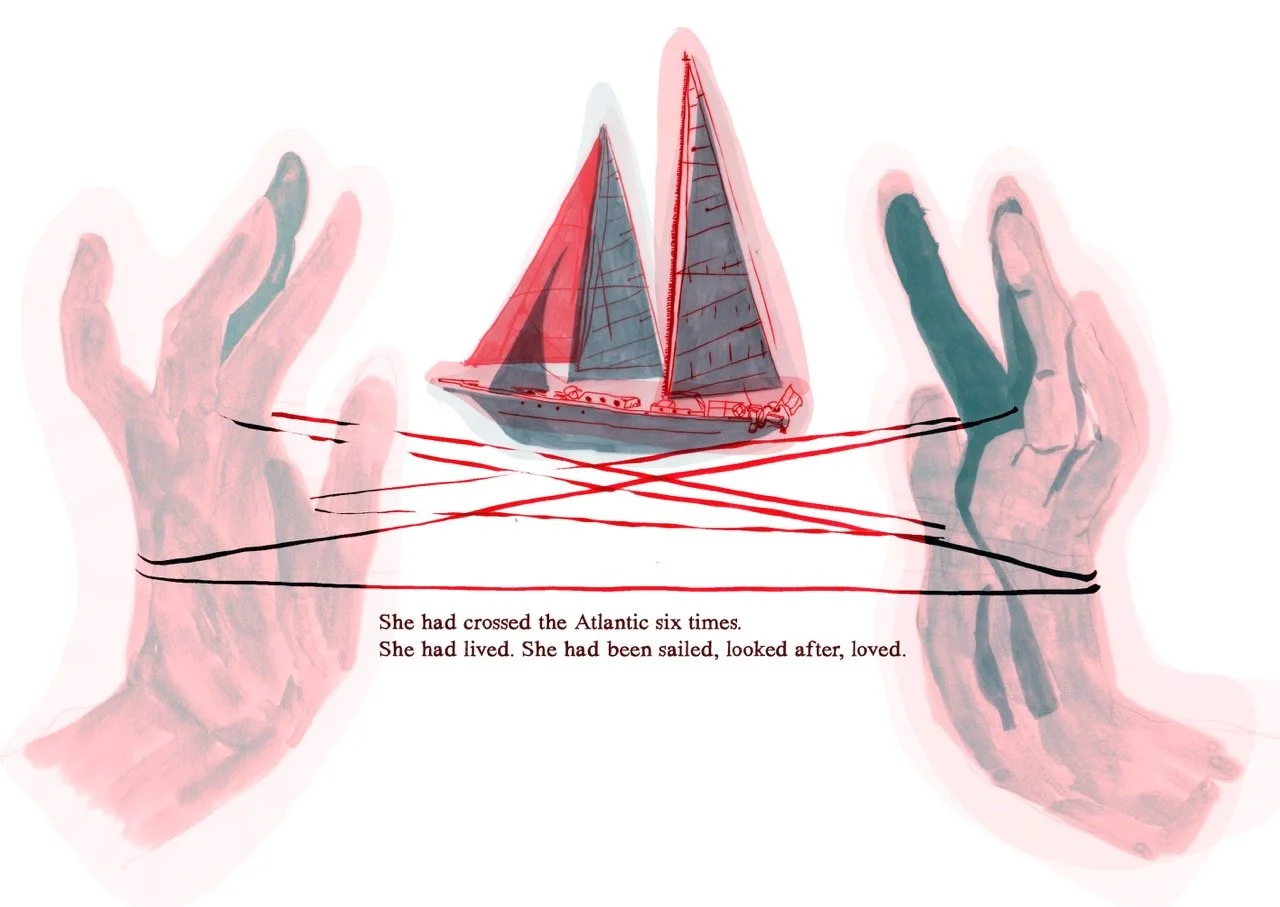
Spirit is an old lady. There were signs of an eventful life everywhere. Wear, yes, but also care. She had crossed the Atlantic six times. She had lived. She had been sailed, looked after, loved.

I drove home and made an offer.

A few months later, my son and I sailed her north. What was meant to be a passage to England became a hard sail into headwinds and waves, so we decided to turn straight for Ireland.

When I bought Spirit, I saw her as my tiger. Like the tiger in Life of Pi. Pi is shipwrecked and ends up sharing a liferaft with a zebra, an orangutan, a hyena, and a Bengal tiger named Richard Parker. The hyena kills first. Then the tiger kills the hyena. And somehow, it saves Pi. The tiger gives him a reason to stay alive, to count the days, to stay alert, to remain human.

Spirit is my tiger.

I need Spirit as much as she needs me. Her fifty tons of steel and Burma teak need to be nurtured, fed, taken care of, loved. In return, she gives me a floating stage. A vessel for creation. A place where something real can happen.

Everything here is bigger than me.
The ocean is bigger than me.
The ship is bigger than me.
The stories are bigger than me.
The people who join are bigger than me.

I am just the gentleman who plays the role of captain, hands in pockets, making sure that what needs to happen, happens.

Spirit of Ostend, a Rolling Thunder Revue

We are always connected

Written By Jo Martens

We are our relationships. It’s a phrase that doesn’t translate easily into English, yet it holds so much meaning for me. As a leader, I’m often told that I must first know myself before I can lead others. It’s a common mantra in many training programs, valuable, but not entirely true for me.
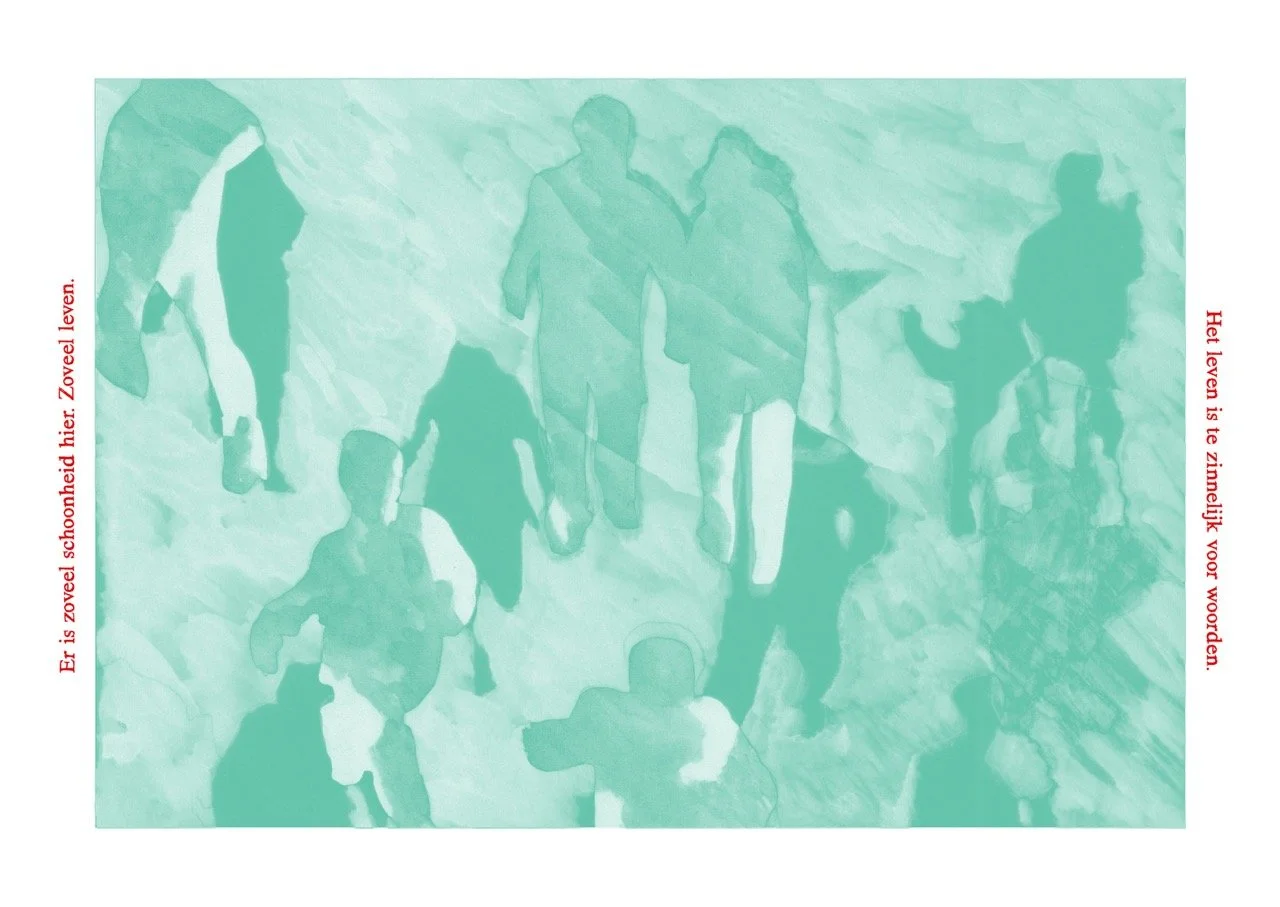
Can I truly know myself, without the reflection of others? Or do I come to know myself through the gaze of others, through the quiet feedback of nature, through being part of a ship, through immersing myself in sailing?

Leadership, too, is something you learn. And learning requires awareness, standing consciously in relationships. A leader can have unknown parts within themselves, always discovering something new. But it’s always in relation, never alone.

We sail together, with respect for each other, admiration, and awe for nature. It’s not a race. We’re not playing a finite game. We’re not escaping the world. That smartphone is still in our pocket, even at sea. But it’s the sea that calls, and you don’t even need to answer.